Thursday, 5 March 2015

Cafe review: Mint Organics


So I've got this list  of restaurants and cafes I want to try (on my phone of course, so I can add to it wherever). All my friends know about it. It's becoming quite large and now spans both Sydney and Melbourne (after a recent trip and many recommendations from a local Melbournian) so I figured it was time to start spreading the love and reviewing some of these places on my blog. Anyway, so last weekend I dragged and a girl friend of mine to one of the latest: Mint Organics. It's a small cafe in Cronulla (a beach-side suburb in Sydney, for those of you not familiar with the area) that prides itself on healthy organic whole foods (you can read my thoughts on organic food here). 

We went for lunch on a Saturday which I expected to be really busy as they don't take bookings, but despite being quite a small cafe we were able to easily find a table. Mint Organics are open 7 days a week from 7am-3pm so are definitely a breakfast/brunch/lunch/afternoon tea kind of place.


Location- 5/5

Close to Cronulla train station, it was tucked away from the rest of Cronulla's cafe scene, a lone shop opposite the beautiful Gunnamatta Bay. This had a two-fold effect of being quiet (and possibly unknown by many) and having many more parking options than the main streets! The cafe was small but cosy, with plenty of wood, metal and greenery.

Service- 2/5

Sadly, the service left a lot to be desired. While the waiters/waitresses were friendly, we waited too long for our table to be cleared (from the people who left just before us) and to be given menus. In fact, we got sick of waiting for the menus so grabbed them from the counter ourselves.

Menu Variety- 4/5

There was a good variety of choices- from mueslis with various alternative milks to bacon and egg rolls, wraps and salads to brown rice sushi. There were certainly a lot of vegetarian options, and opportunities for add-on's and alterations and the cabinet was lined with raw, vegan, sugar-free and paleo treats like raw (bliss) balls, brownies, muffins and cakes. So this really is more of a health-conscious person's mecca (i.e. don't bring your Dad, or the blokes from the footy team- unless they're into that kind of thing!). 

Taste- 5/5

I chose the seeded sourdough topped with avocado, fetta, basil pesto, rocket, toasted pepitas and a poached egg which was delicious and the perfect size! My friend and I also shared a coffee cacao raw ball which was tasty and my takeaway vegan chocolate brownie was yummy too (but I'm afraid there was no hiding the fact that it was still very much a treat).

Price- 4/5

Organic food doesn't come cheap. And this was evident in some of the prices (such as $10 for a smoothie) but other food items were quite reasonable and comparable to other cafes ($5.50 for sushi, $10 for muesli or $13.50 for a panini).

OVERALL- 20/25

The walls were adorned with interesting 'health' foods, like veggie chips, raw bars and organic grains which seemed in contrast to the highly processed protein powders, but Mint Organics did provide an array of basic, tasty and healthy options. I'd go there again!

Check out their website here for more details.

Friday, 27 February 2015

Ricotta Gnocchi


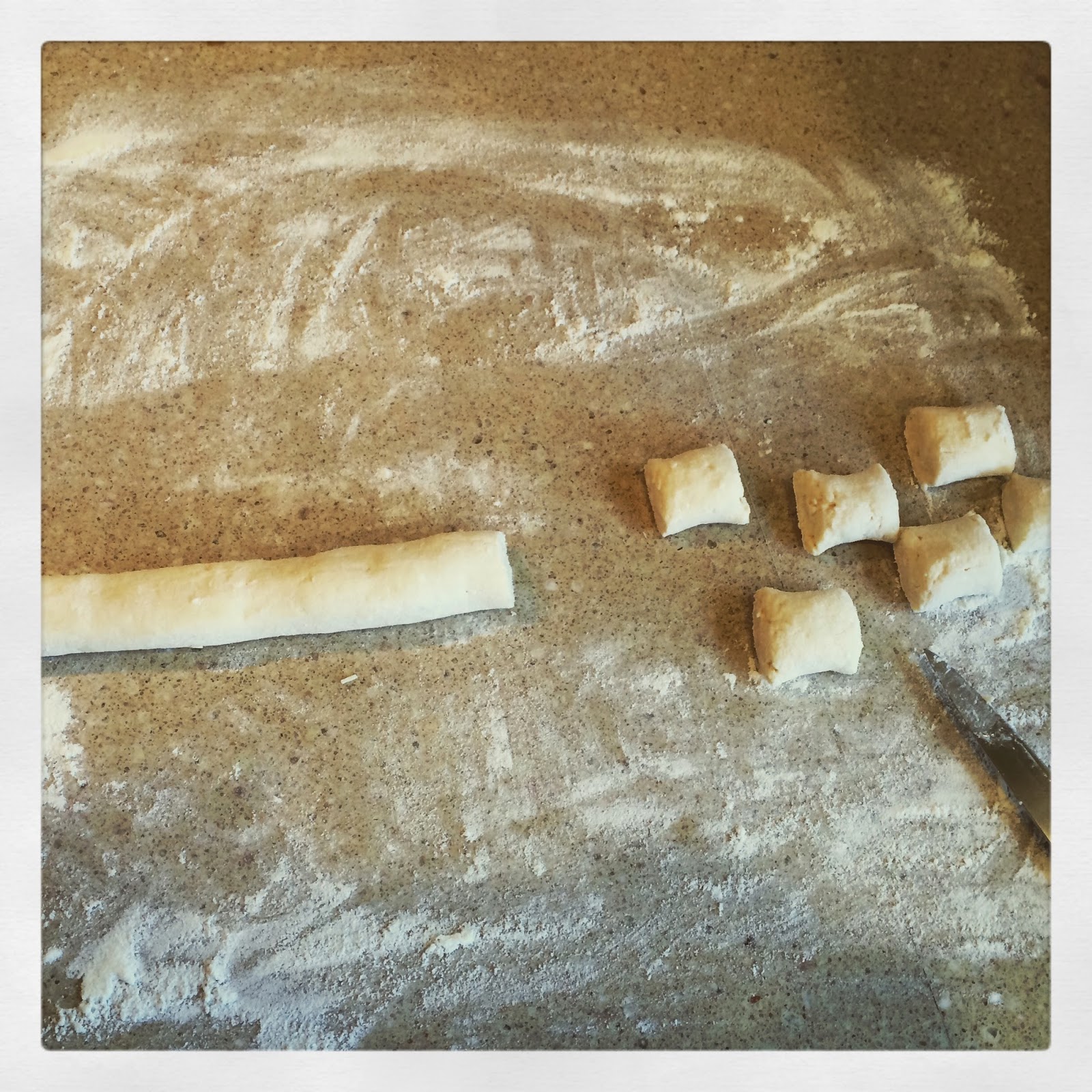
I've said before on this blog how much I love Italian food and this recipe is no different. I had only ever known of potato gnocchi (which didn't overly excite me), but after some particularly good ricotta gnocchi in a restaurant, I knew I had to recreate this type! Based on a Margaret Fulton recipe, these gnocchi are so easy to make. They take less than 15 minutes to mix and roll and only 5 minutes to cook! Talk about speedy cooking. You can also make up a bigger batch and freeze some for later.

I served mine with my homemade arrabbiata sauce and a large garden salad, but you can certainly experiment with that. These gnocchi can be served 'as is' after being boiled or they can then be pan-fried in a little olive oil until golden- both ways are delicious.

Ricotta Gnocchi

250g reduced fat fresh ricotta
1/3 C grated parmesan
1 large egg, lightly beaten
½-¾ C plain flour
 
  1. Combine the ricotta, parmesan and egg in a medium sized bowl. 
  2. Add the flour and mix lightly until just combined. Add only as much flour as you need to make a workable dough.
  3. Divide the dough in three and roll each piece into a 2-3cm thick log (depending on how small or large you like your gnocchi). Cut 2-3cm slices and place on a lightly floured baking sheet. Refrigerate if not using immediately.
  4. Bring a large saucepan of water to the boil, then reduce heat to simmer. Cook gnocchi by dropping them into the saucepan and removing then when they float to the surface (after ~5mins) as this means they’re cooked.
  5. Optional: Pat gnocchi dry with paper towel and add to a frypan over medium heat with a little olive oil. Toss until lightly golden on each side. Remove and serve.
          Serves 3.


Friday, 20 February 2015

Profiteroles


Profiteroles. Delicious choux pastry filled with creamy custard and topped with rich chocolate. Yep, I have a recipe for that. It's not that hard either! I promise you'll feel like a Masterchef when you present these babies to your family and friends (and they'll love it too). 

So, yes, these are a treat, but they have been adapted to make them a healthier version than most of the other recipes you'll find. And I challenge you to try them and not like them!


Profiteroles

¼ C margarine or butter
½ C water
½ C plain flour
2 eggs, lightly beaten
50g dark chocolate, broken into pieces, melted

Vanilla custard:
1 ¼ C reduced fat milk
½ tsp vanilla bean paste
2 egg yolks
1 heaped Tbsp castor sugar
1 heaped Tbsp cornflour
  1. Make custard: Heat milk and vanilla in a small saucepan over high heat and allow to just come to the boil. Remove from heat. In a medium sized bowl, beat egg yolks and sugar until well combined. Pour the hot milk over the egg yolk mixture, whisking continuously. Once mixed in, return to the saucepan over low heat. Mix cornflour with a small amount of water to form a thin paste. Pour slowly into the saucepan, stirring continuously until thickened. Refrigerate.
  2. Preheat oven to 200°C and line a baking tray with baking paper.
  3. Make choux pastry: Place margarine/butter and water in a medium saucepan and bring to the boil. Once boiling, add flour and stir vigorously for 30 seconds or until mixture comes away from the sides of the pan. Transfer mixture to a medium sized bowl and beat with electric beaters for 1 minute or until mixture resembles large breadcrumbs and has cooled slightly. Slowly add eggs as mixture thickens, beating until well combined. Drop tablespoons of mixture onto baking tray and bake for 25 minutes or until puffed and golden.
  4. Pierce a small hole in the side of each profiterole with a skewer and allow to cool in the oven with the oven off and the door slightly ajar (around 45 minutes).
  5. Cut each profiterole in half horizontally and fill base with custard (or cut a small slit and pipe in custard with a piping bag). Replace tops and drizzle profiteroles with a teaspoon each of melted chocolate.
  6. Allow to set and store in the fridge. 
Makes ~12

Saturday, 14 February 2015

Saturated Fat: Saint or Sinner?


There's been a recent shift in public opinion when it comes to fat. What was once demonised as the cause of all weight gain (plus heart disease and many other health conditions) is now being applauded for being the exact opposite. We've seen the rise of paleo lifestyles and butter enthusiasts and we're now being encouraged to once again eat the fat on our steak and slather butter on our bread. But is such a complete one eighty warranted? Should you really be eating spoonfuls of coconut oil or dropping butter in your coffee? (Yes, it's a thing!).

Well, to answer that I first need to explain that there are different types of fat: saturated and unsaturated. And unsaturated fats can be categorised further into monounsaturated and polyunsaturated fats. So what's the difference? Without getting into the nitty gritty of the science, unsaturated fats, found in olive oil, nuts, seeds, avocado and oily fish, have typically been termed 'good fats' and saturated fats, found in animal products, butter, vegetable oils, full cream dairy and coconut, have been typically been termed 'bad fats'. This is because most of the research we've had up until recently has shown that unsaturated fats can decrease our cholesterol and protect our hearts and other organs, while saturated fat does the opposite. Let's also remember though, that saturated fats are typically found in very high quantities in many of the foods deemed 'junk' which we know aren't great for our health: think hot chips, pastries, cakes, chocolate bars etc.
"… unsaturated fats, found in olive oil, nuts, seeds, avocado and oily fish, have typically been termed 'good fats' and saturated fats, found in animal products, butter, vegetable oils, full cream dairy and coconut, have been typically been termed 'bad fats'."

Recently there has been some emerging research on fat which told us to 'loosen the shackles because saturated fat might not be as bad as we once thought', but was then interpreted as 'eat all the butter you want!'. Well, I don't mean to burst that bubble the media has so carefully crafted, but the science wasn't quite that robust. What it really proves is that when saturated fat is replaced with refined carbohydrates, health worsens (so, not quite the same as saying saturated fat is healthy, just that it's better than refined carbs). But also, that there are different types of saturated fats, some better for our cholesterol and overall health than others.

So while saturated fat may no longer adversely affect your health, we can't yet definitely say that it will be beneficial to your health. And let's not forget that there is also still a hell of a lot more evidence on the health benefits of unsaturated fats (a part which I think has been largely ignored).

The verdict? I'm afraid the jury's still out on this one because we still need more research into the effects saturated fat on health. Our bodies certainly do need fat in general, but remember that gram for gram, fat is still the most energy dense macronutrient, so probably don't get into the habit of going through half a tub of coconut oil in a day, or eating croissants every day for brekky. I recommend eating a moderate amount of a variety of fats (rather than betting all your chips on just one type). And by moderate amount I mean a few serves a day in the following quantities: 1 tablespoon of any oil, 2 teaspoons of butter, a small handful of nuts or seeds, a small fillet fresh salmon, 100g regular mince, one quarter of an avocado or a 200g tub of full fat yoghurt.


Friday, 6 February 2015

Arrabbiata sauce from scratch


I don't know what you did in the recent holiday period, but I got my cook on. Cooking is one of those things that I love filling my spare time with, and lucky for me I actually cook all day long for one of my jobs (paid to do what you love? Winning!).

So here is one of my holiday period trials (don't worry, there will be plenty more filtering through over the coming weeks and months): home-made arrabbiata sauce- you know, the spicy tomato one that goes perfectly with pasta? I actually used mine to top my pan-fried ricotta gnocchi (recipe coming soon). It was a lot of fun! And so delicious. And I can imagine myself making big batches of this with the Italian Nonna I don't have and putting it into jars for all the family to last for months…

Yea ok, so I'm not Italian. But I do love pasta! And together with this sauce, they make the perfect pair. Best of all, you know exactly what's going into it and it's nothing but fresh ingredients.

A note to the cooks: I kept mine chunky, but you could whiz it up with a stick blender if you like a smoother consistency. And alter the amount of chilli depending on your taste for spice. This batch was medium in heat, but you could make it hotter with more chillies, or milder by taking out the seeds and white pith of the chilli (the hottest part).


Arrabbiata Sauce

6 medium tomatoes
1 medium red capsicum, deseeded and cut into quarters
½ brown onion, diced
1 small red chilli, finely chopped (or more if using larger, milder chillies)
2 cloves garlic, finely chopped (or minced)
1 tsp oregano
Small pinch salt and pepper
  1. Roast capsicum: Place capsicum pieces skin side up on a baking tray lined with foil, along with whole garlic cloves. Bake at 200°C for ~15 minutes, or until skin starts to blacken. Gather up foil to enclose the capsicum (like a little parcel) and steam in the oven for a further 10 minutes. Remove capsicum from oven and place immediately into a bowl of ice cold water for a couple of minutes to blanch. Remove from water and peel off skin. Discard skin and set capsicum aside to cool slightly.
  2. Blanch tomatoes: Prick the skin of the tomatoes a couple of times each and place in a medium-sized saucepan of water. Cover and bring to the boil for ~10 minutes or until cracks appear in the skin of the tomatoes. Drain and place tomatoes in a bowl of ice cold water for a couple of minutes to blanch. Remove from water and peel off skin. Discard skin and set aside to cool slightly.
  3. Roughly chop capsicum and tomatoes, reserving the juices.
  4. Sauté onion in a little olive oil in a medium saucepan until translucent. Add garlic and chilli and stir for 1 minute.
  5. Add capsicum, tomatoes and juices, oregano, salt and pepper to the saucepan. Stir and simmer for at least half an hour, until sauce has reduced and thickened slightly.
  6. If not using within a couple of days, place in a sterilised glass jar until needed.

Makes ~ 400mL or nearly 2 cups. Serves 4.


Note: to sterilise a jar, wash in hot soapy water, rinse and dry well. Place in the oven at 120°C for 20 minutes. Remove from oven and immediately fill with sauce.

Friday, 30 January 2015

How to eat well while travelling


I’ve just gotten back from a lovely little trip to Hawaii with a couple of friends and while I am a self-proclaimed seasoned traveller, I know quite well the difficulties of maintaining a healthy diet with so much eating out and exotic foods. While you may assume the sole purpose of maintaining some semblance of a good diet is to ward off the holiday kilo creep, there are other reasons. Providing your body with nutritious foods while travelling puts you in prime condition for handling long, stressful journeys including kilometers of walking while exploring new cities and helps your digestive system acclimatize to a new food culture (one particular story from a trip to Asia springs to mind, but I think you get the idea).

  1. Stash your suitcase with a few shelf-stable (sealed) healthy snacks from home, such as raw nuts, wholegrain crackers, roasted chickpeas or muesli bars. Pop one in your handbag or backpack each day and you have an emergency snack to carry you through to the next meal.
  2. Keep hydrated! I swear the air-conditioning on planes sucks the water from your skin 10x more than our home ACs. Judge your hydration by the colour of your urine- the scale being nearly clear= good job, keep it up, to dark orange= have some water NOW! Also, keep in mind that not every country has drinkable tap water as good as ours so you may need to buy the bottled stuff.
  3. When booking accommodation, try to stay close to a supermarket or convenience store. This way you don’t have to lug grocery bags for kilometers and you’ll be more inclined to pick up a (cheaper) healthy meal or snack. Also, pre-washed salad bags, individual bread rolls, deli ham or tins of tuna and a tub of hummus make for a quick and easy lunch will little-no utensils required.
  4. If possible, have a good breakfast before you set out for the day to keep you going. Pick up a box of muesli and some milk or yoghurt and pack a plastic bowl and spoon if you’re staying somewhere without a kitchen (because most places will still have at least a mini-bar fridge to store cold items in).
  5. Seek out fruit as snacks throughout the day. Particularly the deliciously fresh stuff you can pick up at local markets, farm doors or vans on the side of the road! Aim for 2 a day to get much-needed vitamins and minerals, as well as fibre and fluid.
  6. When you’re exploring your new surroundings be sure to take note of any good-looking cafes or restaurants for later on. And ask the locals for recommendations! Make a note on your phone, or mark it on your map, so you can actually find it later.
  7. When going out for meals, ask for rich sauces and creamy dressings on the side so you can add your own. And remember, chefs tend to be more heavy-handed with things like oil and salt so go easy (or your body may pay you back with heartburn or reflux later on).
  8. Watch your portions. It’s easy to overdo it when you’re eating something delicious but rather than eating as much as possible, practice the art of mindful eating and really savour your meal. That way you won’t feel the need to finish your plate just because there’s still food on it.
Yep, I went there!
      
       Happy travels!

Saturday, 3 January 2015

Raspberry swirl yoghurt bark


Sydney has been ramping up the heat this Summer and I've been searching for refreshing foods and drinks to cool me down. While ice-creams and ice-blocks are delicious (and I certainly do enjoy them from time to time), sometimes you're after more of an everyday healthy treat. This certainly delivers on both counts.

I've seen recipes for yoghurt bark floating around on the internet and thought, what a great idea! You really can use any type of yoghurt and top it with just about anything- nuts, seeds, fruit, coconut, mint, lemon, etc. Get creative with it! Here's the basic recipe for raspberry swirl yoghurt bark, but you could always just top it with whole raspberries (or any other fruit) instead.


Raspberry swirl yoghurt bark 

300-400g reduced fat plain Greek yoghurt (e.g. 2x tubs Chobani)
½ C frozen raspberries
3 Tbsp boiling water
2 tsp honey
Toppings:
Flaked almonds
Coconut flakes
Chopped mint

  1.       Blend raspberries, water and honey until smooth.
  2.       Pour yoghurt into a bowl and swirl through a third of the raspberry mixture.
  3.       Pour onto a tray lined with baking paper and spread out evenly until 0.5-1cm thick.
  4.       Drizzle over some more of the raspberry mixture (you probably won’t need it all but make sure you save it for a later use!) and sprinkle over toppings.
  5.       Freeze for a few hours or until hard. Break into pieces (‘bark’) and store in a snap lock bag in the freezer.